According to Schneider Electric, liquid cooling is moving from niche to necessity as artificial-intelligence workloads drive data-center rack density to unprecedented levels, with some systems projected to reach 240 kilowatts per rack as early as 2026.
This shift highlights how rapidly AI is reshaping the physical backbone of the digital economy. Since OpenAI's ChatGPT brought AI into the mainstream in late 2022, the technology has spread into sectors ranging from education and healthcare to finance and manufacturing. Schneider Electric says the next phase will be defined less by the training of large models and more by AI inference, the real-time application of large-scale models, placing intense demands on data-center infrastructure.
“The AI disruption of recent years is merely the prelude to the promise of 2026: the full integration of AI into data-center operations and manufacturing,” the company said in a forward-looking industry outlook. As workloads continue to grow, traditional air cooling is reaching its limits, accelerating the adoption of direct-to-chip and immersion liquid cooling systems that can efficiently remove heat from high-performance processors.
Also read: Schneider expands liquid cooling after Motiware acquisition
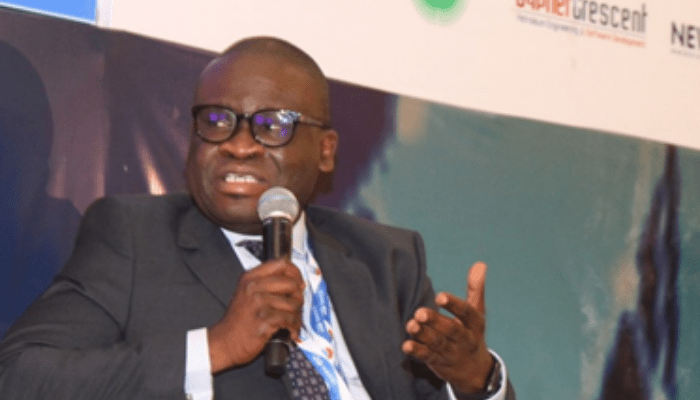
“AI is no longer just a tool; it is a transformative force that demands the right infrastructure to unlock its full potential,” said Ajibola Akindele, Country President, Schneider Electric West Africa. Organizations that invest in AI-ready data centers featuring advanced cooling, modular design and energy-efficient power systems will gain a competitive edge, he said.
AI adoption is already widespread. According to McKinsey's latest State of AI survey, 78% of organizations now use AI in at least one business function, up from 72% in early 2024 and 55% in 2023. While sales and marketing remain the dominant use cases, deployments are expanding into manufacturing, health care, finance, and data centers, where AI is used for predictive maintenance, cooling optimization, and energy management.
The rise of so-called “AI factories” is further driving changes in infrastructure. Unlike traditional data centers focused on storage and general computing, AI factories are designed to generate intelligence, training, fine-tuning, and running models to generate insights or revenue. Schneider Electric estimates that projected workloads could range from 20 kW per rack for compressed models to 140 kW for advanced, agentive systems.
By 2030, about a quarter of new data-center builds are expected to have capacity greater than 100 kW per rack, while the other half will be between 40 kW and 80 kW. Next-generation hardware platforms, such as Nvidia's Rubin CPX GPUs and Vera CPUs, promise massive performance gains but also increase power and cooling requirements.
To meet these demands, operators are increasingly turning to digital twins – virtual replicas of physical systems – to design and optimize electrical and cooling infrastructure before deployment. Robotics is also gaining popularity, automating tasks ranging from server installation to liquid-cooling system management.
Also read: Schneider Electric warns Nigeria's data centers must be AI-ready
Not all investments will be greenfield. Small operators are upgrading existing facilities with brownfield retrofits, higher capacity racks, power distribution units, and bolt-on liquid cooling to support AI workloads without building entirely new sites.
Power strategy remains a significant hurdle. While renewables currently supply about 27% of data-center power, operators are diversifying natural-gas turbines with carbon capture, battery storage and alternative fuels to ensure resiliency as AI demand grows.
Schneider Electric says that by 2026 AI will move from disruptive technology to mainstream infrastructure, and liquid cooling will be at the center of that transition.